
Equipment Loan Calculator: Estimate Payments, Interest, and Financing Costs
Beginning with Equipment Loan Calculator: Estimate Payments, Interest, and Financing Costs, the narrative unfolds in a compelling and distinctive manner, drawing readers into a story that promises to be both engaging and uniquely memorable.
Exploring the intricacies of equipment loan calculators, this article delves into how they assist in estimating payments, interest, and financing costs across various industries and scenarios.
Equipment Loan Calculator Overview
An equipment loan calculator is a financial tool designed to help individuals and businesses estimate the payments, interest, and financing costs associated with borrowing money to purchase equipment. It provides users with a clear understanding of the total cost of a loan, allowing them to make informed decisions about their finances.
Purpose of an Equipment Loan Calculator
An equipment loan calculator is essential for individuals and businesses looking to acquire equipment through financing. By inputting key details such as loan amount, interest rate, and loan term, users can quickly determine the monthly payments and total interest paid over the life of the loan.
How an Equipment Loan Calculator Helps Estimate Payments, Interest, and Financing Costs
- Calculates Monthly Payments: The calculator uses the loan amount, interest rate, and loan term to compute the monthly payment required to repay the loan.
- Determines Total Interest: By factoring in the interest rate and loan term, the calculator provides an estimate of the total interest that will be paid over the duration of the loan.
- Evaluates Financing Costs: Users can adjust the loan amount, interest rate, and loan term to see how changes impact the overall financing costs, helping them choose the most cost-effective option.
Examples of Industries or Scenarios Where Equipment Loan Calculators are Commonly Used
- Construction Industry: Contractors often use equipment loan calculators to finance the purchase of heavy machinery and tools needed for construction projects.
- Medical Sector: Healthcare providers may utilize equipment loan calculators to acquire expensive medical equipment such as MRI machines or surgical tools.
- Manufacturing Businesses: Companies in the manufacturing sector may rely on equipment loan calculators to estimate costs for purchasing production machinery and equipment.
Understanding Equipment Financing
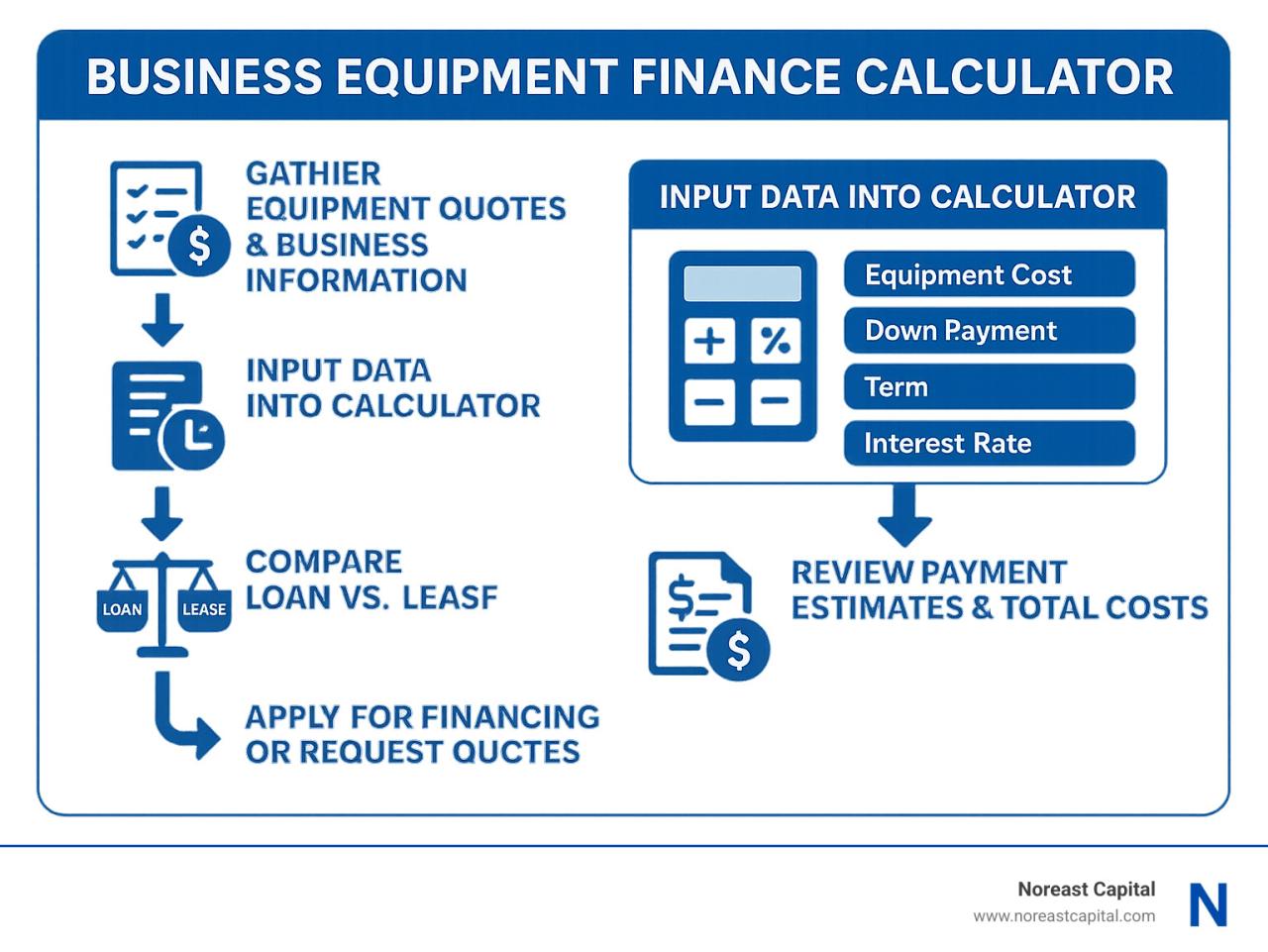
Equipment financing is a type of funding that allows businesses to acquire the necessary equipment without paying the full amount upfront. It is crucial for businesses as it helps them manage cash flow, preserve working capital, and stay technologically competitive.
Types of Equipment Financing Options
There are various types of equipment financing options available in the market to cater to the diverse needs of businesses:
- Equipment Loans: Businesses can secure a loan to purchase equipment and repay it over a set period with interest.
- Equipment Leasing: This option allows businesses to use equipment for a specific period by making regular lease payments. At the end of the lease term, there may be an option to purchase the equipment.
- Equipment Financing Agreements: These agreements involve a lender providing funds to purchase equipment, and the business repays the amount over time, along with interest.
Advantages and Disadvantages of Equipment Financing vs. Purchasing Outright
When considering equipment financing versus purchasing outright, businesses should weigh the pros and cons:
- Advantages of Equipment Financing:
- Preservation of Capital: Equipment financing allows businesses to preserve their capital for other operational expenses or investments.
- Flexibility: Businesses can acquire the latest equipment without a large upfront payment, enabling them to stay competitive in the market.
- Tax Benefits: Equipment financing may offer tax advantages, such as deducting interest payments or depreciation.
- Disadvantages of Equipment Financing:
- Higher Overall Cost: Financing equipment may result in paying more over time due to interest payments.
- Ownership Considerations: Businesses do not own the equipment outright until the financing is paid off, which may limit flexibility in the long run.
- Restrictions: Some financing options may come with restrictions on equipment use or modifications.
Components of Equipment Loan Calculators
When using an equipment loan calculator, there are key inputs that are required to estimate payments, interest, and financing costs accurately. These inputs play a crucial role in determining the overall cost of financing equipment and help borrowers make informed decisions.
Let’s explore the components of equipment loan calculators in more detail.
Key Inputs for Equipment Loan Calculators
- Loan Amount: This is the total amount of money borrowed to purchase the equipment. The loan amount directly impacts the monthly payments and total interest paid over the loan term.
- Interest Rate: The interest rate is the cost of borrowing money and is expressed as a percentage. A lower interest rate can result in lower total interest costs over the loan term.
- Loan Term: The loan term is the duration of time over which the loan will be repaid. Longer loan terms typically result in lower monthly payments but higher total interest costs.
Impact of Variables on Results
- Loan Amount: Increasing the loan amount will lead to higher monthly payments and total interest costs.
- Interest Rate: A higher interest rate will result in higher monthly payments and total interest costs over the loan term.
- Loan Term: Extending the loan term will lower monthly payments but increase the total interest paid over time.
Additional Features in Equipment Loan Calculators
- Amortization Schedule: This feature provides a detailed breakdown of each payment, showing how much goes towards principal and interest.
- Prepayment Calculator: Some equipment loan calculators allow users to input additional payments to see how it affects the loan term and total interest costs.
- Comparison Tool: Users can compare different loan options side by side to determine the most cost-effective financing solution.
Calculating Loan Payments
In order to determine loan payments using an equipment loan calculator, you can follow a step-by-step guide that will help you understand the process and optimize your payments.To calculate loan payments, the equipment loan calculator typically uses the following formula:
Monthly Payment = (P x r x (1+r)^n) / ((1+r)^n
1)
Where:
- P is the principal amount (loan amount)
- r is the monthly interest rate
- n is the number of monthly payments
Determining Monthly Payments
- Input the loan amount, interest rate, and loan term into the equipment loan calculator.
- The calculator will then compute the monthly payment based on the formula provided.
- Review the monthly payment amount to ensure it fits within your budget and financial capabilities.
Calculating Total Interest Paid
- The total interest paid can be determined by multiplying the monthly payment by the total number of payments and subtracting the principal amount.
- Understanding the total interest paid gives you insight into the overall cost of financing the equipment.
Optimizing Loan Payments
- Consider adjusting the loan term to see how it impacts the monthly payments and total interest paid.
- Explore the option of making additional payments to reduce the total interest paid and shorten the loan term.
- Review different scenarios in the calculator to find the most cost-effective payment plan that aligns with your financial goals.
Factors Affecting Financing Costs
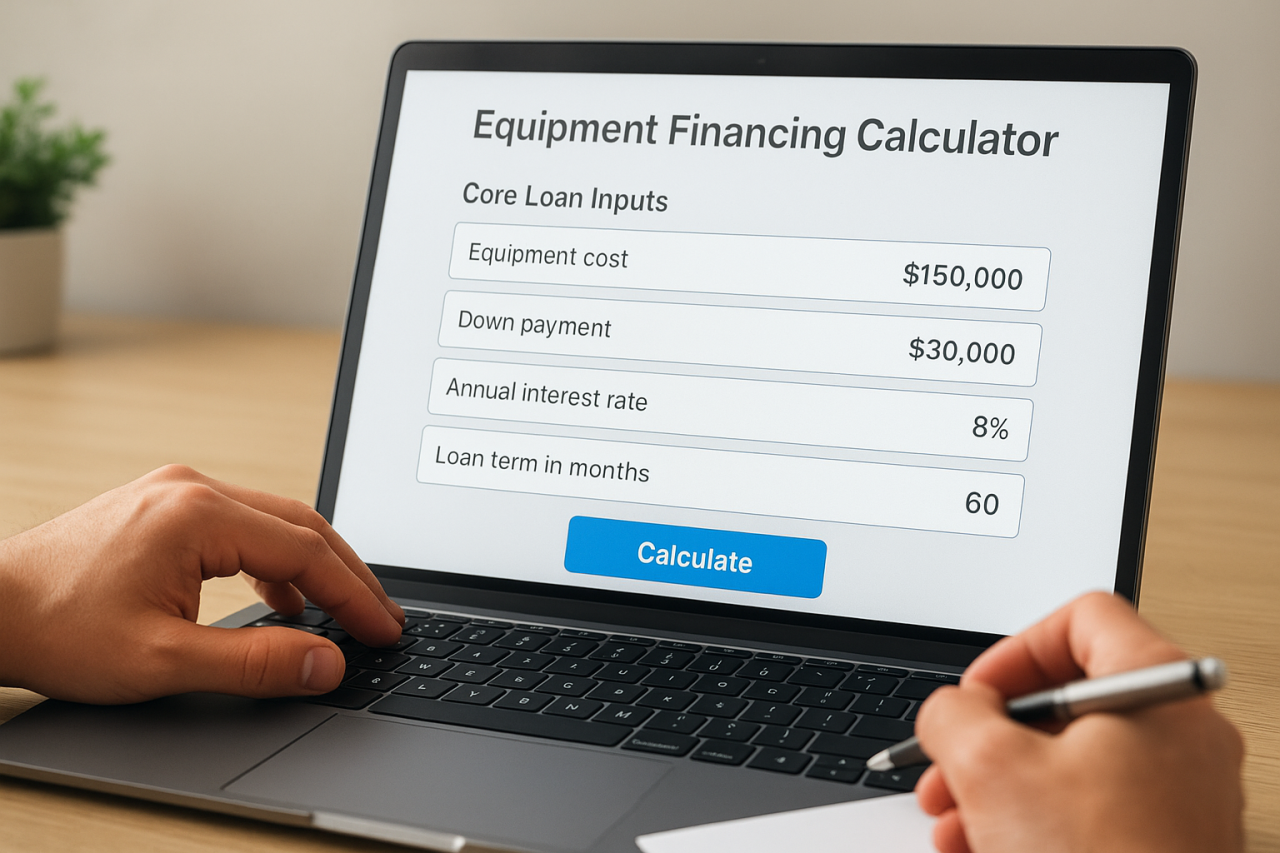
When financing equipment, several factors can significantly impact the total cost of the loan. Understanding these factors is crucial in making informed decisions about equipment financing.Interest Rates: The interest rate on the loan plays a significant role in determining the total financing costs.
Higher interest rates result in higher monthly payments and increased overall costs. Conversely, lower interest rates can lead to lower monthly payments and reduced financing costs.Loan Terms: The length of the loan term also affects financing costs. Longer loan terms typically result in lower monthly payments but higher overall costs due to accruing interest over a more extended period.
On the other hand, shorter loan terms may lead to higher monthly payments but lower total financing costs.Down Payments: The amount of the down payment can impact financing costs as well. A larger down payment reduces the principal amount borrowed, resulting in lower monthly payments and less interest paid over the life of the loan.
Conversely, a smaller down payment means higher monthly payments and increased financing costs.Real-world Example: Consider two scenarios where a business is financing a piece of equipment costing $50,000. In the first scenario, the business secures a loan with a 5% interest rate, a 5-year term, and a 20% down payment.
In the second scenario, the business opts for a 7% interest rate, a 7-year term, and a 10% down payment. By comparing the two scenarios, you can see how changes in interest rates, loan terms, and down payments impact the total financing costs.
Impact of Interest Rates on Financing Costs
- Higher interest rates lead to higher monthly payments and increased total financing costs.
- Lower interest rates result in lower monthly payments and reduced overall costs.
- For example, a 1% difference in interest rates can translate to significant savings over the life of the loan.
Effect of Loan Terms on Financing Costs
- Longer loan terms may offer lower monthly payments but result in higher total financing costs due to accrued interest.
- Shorter loan terms lead to higher monthly payments but lower overall financing costs.
- Comparing different loan term lengths can help determine the most cost-effective financing option.
Influence of Down Payments on Financing Costs
- A larger down payment reduces the principal amount borrowed, resulting in lower monthly payments and reduced interest costs.
- Smaller down payments lead to higher monthly payments and increased total financing costs.
- Choosing the right down payment amount can help manage financing costs effectively.
FAQ
How can an equipment loan calculator help businesses?
Equipment loan calculators provide a detailed breakdown of payments, interest, and financing costs, helping businesses make informed decisions about equipment purchases.
What are the key inputs required for using an equipment loan calculator?
The key inputs typically include loan amount, interest rate, and loan term, which are crucial for accurate calculations.
How does equipment financing differ from purchasing outright?
Equipment financing allows businesses to acquire necessary equipment without a large upfront payment, while purchasing outright involves immediate full ownership but with a significant upfront cost.