
Business Litigation Lawyer: Costs, Disputes, and Commercial Legal Options
Starting off with Business Litigation Lawyer: Costs, Disputes, and Commercial Legal Options, this introductory paragraph aims to grab the readers’ attention and provide a glimpse of what they can expect in the discussion ahead.
The following paragraph will delve into the specifics of the topic, offering insights and information.
Introduction to Business Litigation Lawyer
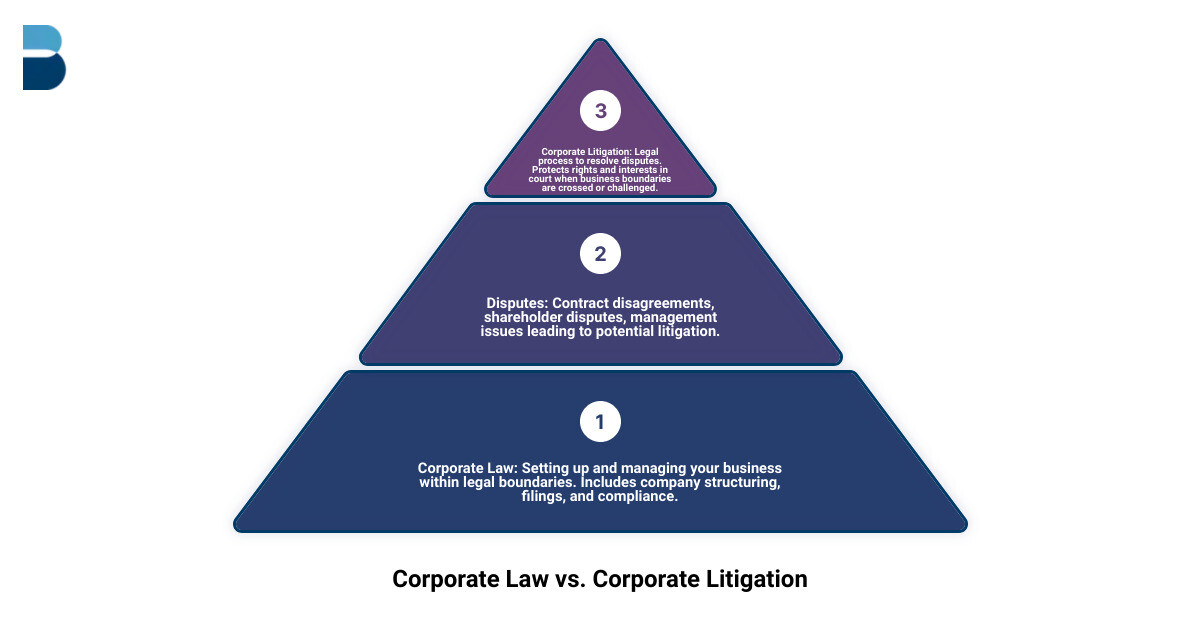
Business litigation lawyers play a crucial role in handling legal matters related to commercial disputes and conflicts within the business world. Their expertise in navigating the complex legal landscape can prove invaluable for businesses facing legal challenges.When it comes to commercial disputes, hiring a business litigation lawyer is essential to protect the interests of the company and ensure a fair resolution to the conflict.
These lawyers are well-versed in business law and have the experience to represent their clients effectively in court or during negotiations.
Common Legal Issues Requiring Business Litigation Lawyer
- Contract Disputes: Business litigation lawyers are often called upon to resolve disputes arising from breach of contract, non-performance, or disagreements over contract terms.
- Intellectual Property Disputes: Protecting intellectual property rights is crucial for businesses, and lawyers specializing in business litigation can help in cases involving trademark infringement, copyright disputes, or patent issues.
- Employment Disputes: Business litigation lawyers handle cases related to labor laws, wrongful termination, discrimination, harassment, or wage disputes within a company.
- Fraud or Misrepresentation Claims: Businesses may face legal challenges due to fraudulent activities, misrepresentation of facts, or deceptive practices, requiring the expertise of a business litigation lawyer to seek remedies.
Costs Associated with Business Litigation
When it comes to business litigation, costs can quickly add up, impacting a company’s bottom line. It’s essential for businesses to understand the various expenses involved in hiring a business litigation lawyer, how billing structures work, and the potential outcomes in relation to the costs incurred.
Various Costs Involved in Hiring a Business Litigation Lawyer
- Attorney Fees: Business litigation lawyers typically charge by the hour, with rates varying based on the lawyer’s experience and the complexity of the case.
- Court Filing Fees: These are fees required to file legal documents with the court and can vary depending on the nature of the case and the court’s jurisdiction.
- Expert Witness Fees: If expert witnesses are needed to support the case, their fees can be a significant cost factor in business litigation.
- Discovery Costs: Expenses related to gathering evidence, conducting depositions, and other discovery processes can also contribute to the overall costs.
How Billing Structures Work with Business Litigation Lawyers
- Hourly Rates: Most business litigation lawyers bill clients by the hour, with rates varying based on the lawyer’s experience and the complexity of the case.
- Contingency Fees: In some cases, business litigation lawyers may work on a contingency fee basis, where they only get paid if the case is successful, usually taking a percentage of the settlement or judgment.
- Retainer Fees: Some lawyers may require clients to pay a retainer upfront, which is then used to cover ongoing legal expenses as the case progresses.
Comparing Costs of Litigation to Potential Outcomes for Businesses
- Cost-Benefit Analysis: Businesses need to weigh the potential costs of litigation against the possible outcomes, considering factors such as the strength of their case, the likelihood of success, and the potential damages or settlements involved.
- Risk Management: It’s crucial for businesses to assess the risks and benefits of pursuing litigation, taking into account the financial implications and potential impact on their reputation.
- Alternative Dispute Resolution: In some cases, alternative dispute resolution methods like mediation or arbitration may be more cost-effective than traditional litigation, offering a way to resolve disputes without incurring high legal expenses.
Disputes Handled by Business Litigation Lawyers
Business litigation lawyers are well-equipped to handle a wide range of disputes that may arise in the corporate world. These disputes can vary in complexity and scope, requiring a strategic approach to resolution. Let’s delve into the types of disputes typically handled by business litigation lawyers, explore examples of high-profile cases, and discuss the strategies they employ to resolve these disputes effectively.
Types of Disputes
- Contract Disputes: These involve disagreements over the terms and conditions of a contract, breach of contract, or enforcement of contractual obligations.
- Intellectual Property Disputes: Cases related to patents, trademarks, copyrights, and trade secrets fall under this category.
- Business Tort Claims: This includes cases of fraud, unfair competition, defamation, interference with contracts, and other intentional business-related wrongs.
- Shareholder Disputes: Disagreements among company shareholders regarding ownership rights, voting powers, or corporate governance issues.
High-Profile Business Litigation Cases
- Apple Inc. vs. Samsung Electronics Co.: A long-standing legal battle over patent infringement in the smartphone industry.
- Enron Corporation: Notorious for its accounting fraud scandal, leading to one of the largest bankruptcies in U.S. history.
- Uber Technologies Inc. vs. Waymo LLC: A case involving allegations of trade secret theft in the autonomous vehicle technology sector.
Strategies for Dispute Resolution
- Mediation and Arbitration: Alternative dispute resolution methods used to reach a settlement outside of court.
- Litigation: Pursuing a legal case through the court system, presenting arguments and evidence to a judge or jury.
- Negotiation: Engaging in discussions with the opposing party to find a mutually acceptable resolution.
- Risk Assessment: Evaluating the potential outcomes and risks associated with different legal strategies before proceeding.
Commercial Legal Options for Businesses
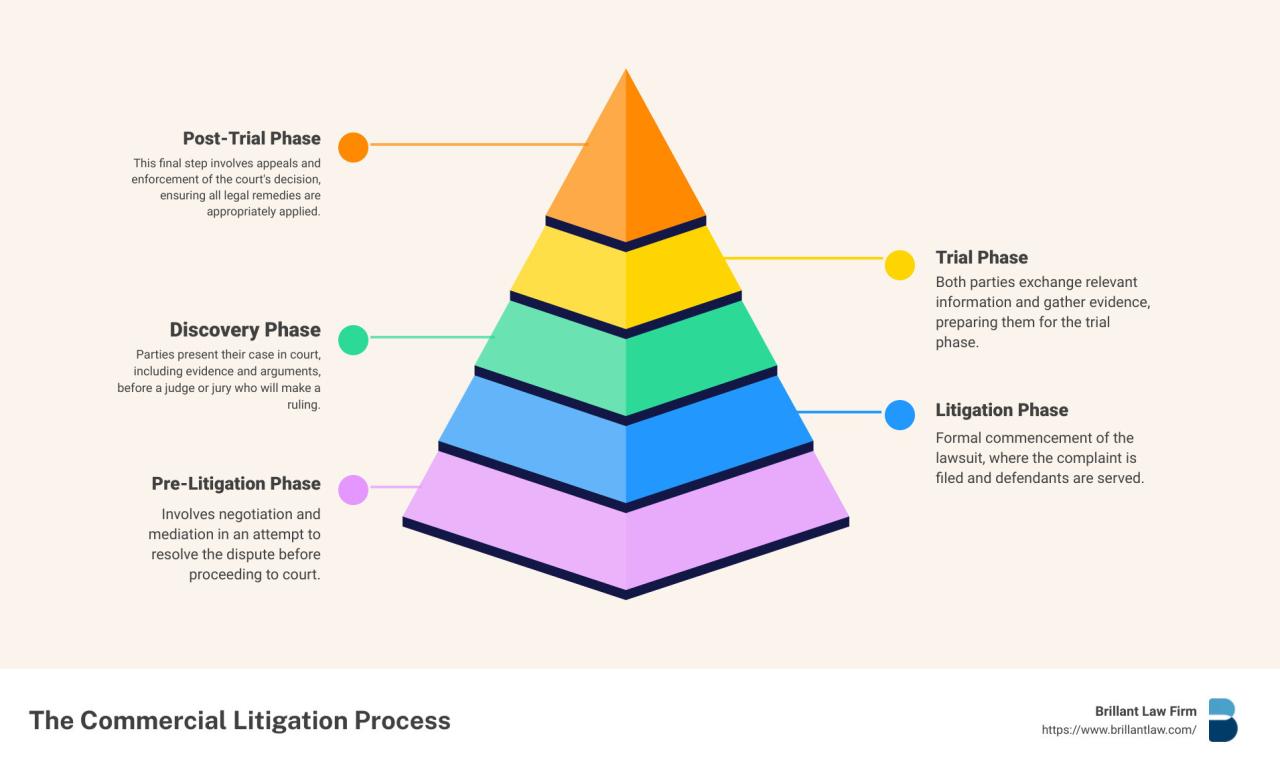
When it comes to resolving legal disputes, businesses have alternatives to traditional litigation that can be more cost-effective and efficient. One such option is arbitration, which offers a private and less adversarial process compared to going to court. However, there are benefits and drawbacks to consider when choosing between arbitration and traditional litigation.
Arbitration vs. Traditional Litigation
- Arbitration:
- Benefits:
- Confidentiality: Arbitration proceedings are private, unlike court cases which are public record.
- Speed: Arbitration can often be resolved more quickly than litigation, saving time and money.
- Flexibility: Parties can choose their arbitrator and have more control over the process.
- Drawbacks:
- Limited Appeal Rights: Decisions made in arbitration are usually final and binding, with limited options for appeal.
- Costs: While arbitration can be cheaper than litigation, the costs can still be significant depending on the complexity of the case.
- Lack of Precedent: Arbitration decisions do not set legal precedents, which can be a disadvantage in future disputes.
- Benefits:
- Traditional Litigation:
- Benefits:
- Legal Precedent: Court decisions set legal precedents that can be useful in future cases.
- More Formal Process: Litigation follows strict legal procedures and rules, providing a structured framework for resolving disputes.
- Appellate Review: Parties have the right to appeal court decisions to higher courts for review.
- Drawbacks:
- Public Record: Court cases are part of the public record, which may not be desirable for businesses seeking confidentiality.
- Time-consuming: Litigation can be a lengthy process, leading to higher costs and potential business disruptions.
- Less Control: Parties have less control over the process and judge assigned to their case in court.
- Benefits:
Proactive Legal Risk Management
Businesses can take proactive steps to prevent legal disputes by focusing on legal compliance and risk management strategies. This includes:
- Regular Compliance Audits: Conducting regular audits to ensure compliance with relevant laws and regulations.
- Employee Training: Providing comprehensive training to employees on legal requirements and best practices.
- Contract Review: Thoroughly reviewing contracts and agreements to identify potential legal risks and liabilities.
- Dispute Resolution Clauses: Including dispute resolution clauses in contracts to Artikel procedures for resolving disputes outside of court.
Essential FAQs
What are the typical costs associated with hiring a business litigation lawyer?
The costs can vary depending on the complexity of the case, but they usually include attorney fees, court fees, and other related expenses.
What are some alternative legal options available to businesses besides litigation?
Businesses can opt for mediation, negotiation, or arbitration to resolve disputes without going to court.
How do business litigation lawyers typically handle high-profile cases?
They use a combination of legal expertise, negotiation skills, and strategic planning to represent their clients effectively.


![How to File a CRD Complaint in California [2025 Update]](https://wrz.radarpekalongan.id/wp-content/uploads/2026/10/wrongful-termination-damages-768x768.jpg)